
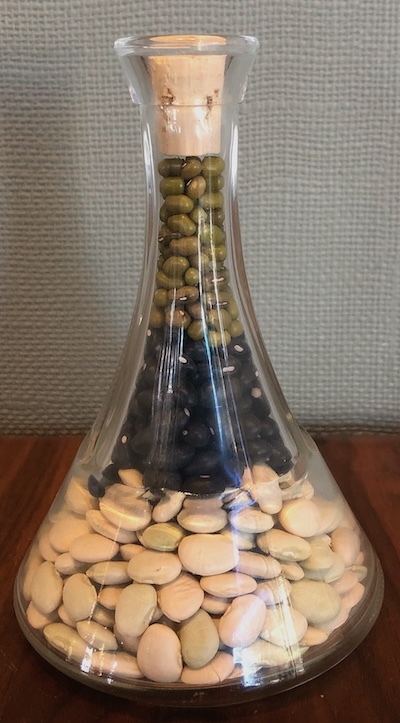
There are 3 types of beans:
Everyone will receive a message - win or lose.
Several people carefully analyzed, counted, measured, and multiplied. Others made a 'wild ass guess' by gut instinct and intuition. Estimation is a difficult art.
Bar graph of the guesses:
< 100 *
< 200 **********
< 300 ***************************************
< 400 ***********************************************
< 500 ***********************************************
< 600 *********************
< 700 **************
< 800 *******
< 900 *****
<1000 ***
<1100 **
<1300 *
<1400 *
<1900 *
<8600 *
Here are all the guesses - with people's names abbreviated to the first 3 characters of their first and last names.
| Mung Beans | 104 |
| Black Beans | 115 |
| Baby Lima Beans | 268 |
| Total | 487 |
| Off By | Guess | Name | Prize |
|---|---|---|---|
| 5 | 492 | Paxton Lewis | $40 Gift Certificate at the Co-op at 620 G Street |
| 5 | 492 | Heather Halog | $40 Gift Certificate at the Co-op at 620 G Street |
| 6 | 481 | Anna Hetmankova | Your choice of several plant-based cookbooks. |
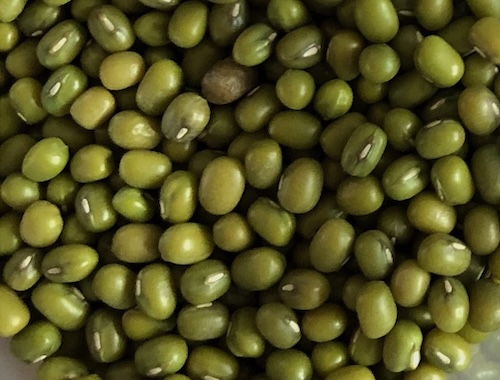 |
Mung beans (Vigna radiata) are small green beans in the legume family that have been cultivated since ancient times. Native to India, they later spread to China and various parts of Southeast Asia. These beans have a slightly sweet taste and are sold fresh, as sprouts, or as dried beans. They're highly nutritious and versatile, typically eaten in salads, soups, and stir-fries. 101 Cookbooks: 10 Recipes with Mung Beans |
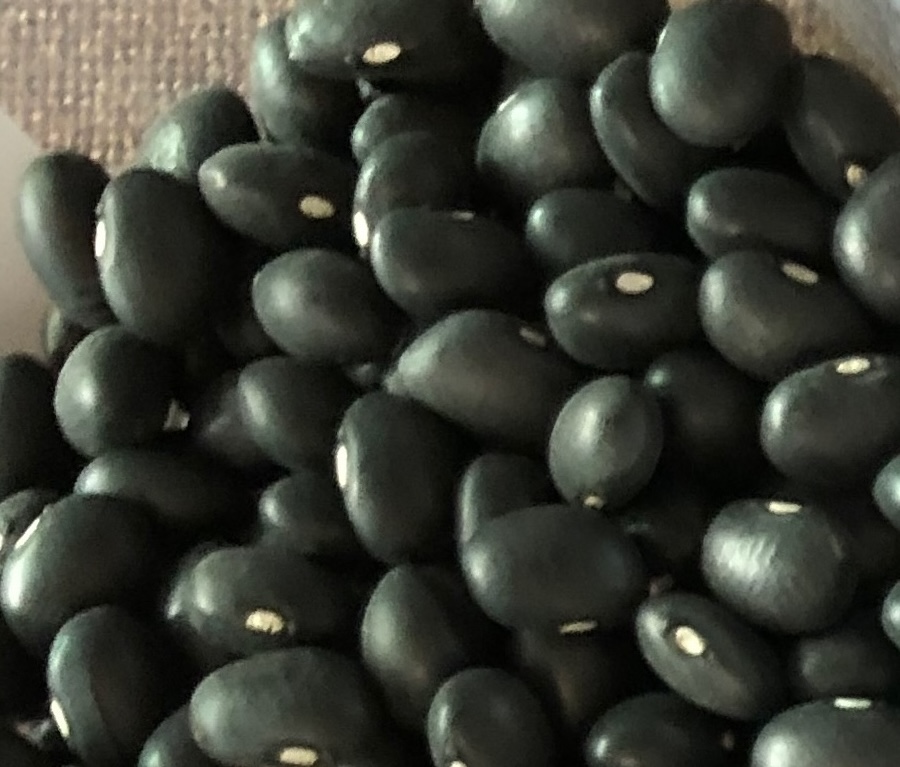 |
Native to the Americas and beloved in Mexico, Brazil, Cuba, and the American Southwest. Earthy and meaty, they turn everything they touch an inky purplish black. |
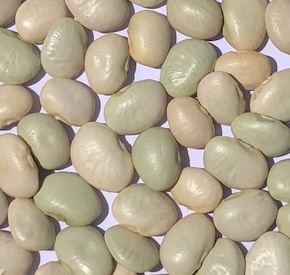 |
The lima bean (Phaseolus lunatus L.) has a long and distinguished history that might surprise those of us who know it only as a humble ingredient of succotash. The most important member [of the wild bean species group] is P. lunatus, the moon-shaped or the lima bean. Its name does come from the Peruvian capital of Lima, even though perversely it is pronounced 'lime-uh' in English. It is among the largest of beans and for those who were subjected to them in the form of canned limas, the memory of their pasty texture, bitter metallic aftertaste and lurid green color can only evoke the gag reflex. This is a pity, for when fresh or even dried they are among the most pleasant and affable of beans, hulking in proportions, gentle and sweet. |